


The user interface was never the product. It was an apology.
An apology for software that couldn’t adapt to you. For systems so rigid that you had to learn them — memorize their menu hierarchies, internalize their keyboard shortcuts, adjust your workflow to fit their logic. We called this “user experience design”. We wrote books about it. We held conferences. We built entire careers around making the apology slightly less painful.
And it worked. For forty years, it worked. Because there was no alternative. Building a custom interface for every person was economically absurd. So Microsoft shipped Word to a billion people — one interface, everyone adapts. Power users suffered through features they’d never touch. New users drowned in menus they couldn’t parse. And designers spent their days polishing a bridge between humans and computers that, frankly, nobody wanted to cross in the first place.
AI just removed the need for the bridge.
No, seriously. The cost of generating an interface is dropping toward zero. Software no longer needs to look the same for everyone. It doesn’t even need to look the same for you tomorrow. And that changes everything — not just how we design apps, but whether we need most of them at all.
When the interface reshapes itself every time you open it — built for this moment, this task, this version of you — what’s left for a designer to ship to everyone?
Let me break it down, without breaking the bridge. 🌉
The UI was never the point
Naval Ravikant X-ed (or how the new cool kids call tweeted these days) two words that broke design Twitter: “UI is pre-AI.” Two-point-four million views. Thousands of replies. Designers furious. Founders nodding.
He wasn’t wrong.
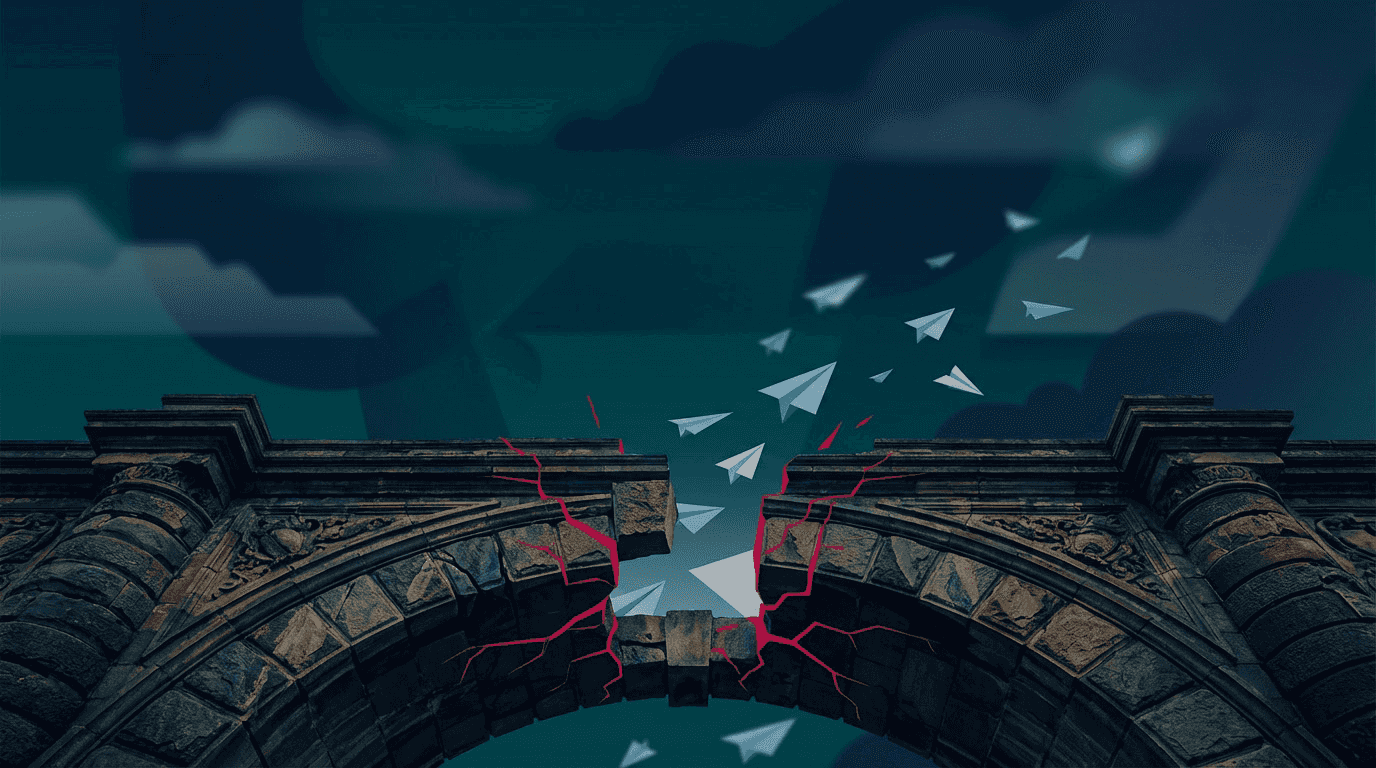
Traditional software interfaces exist because they were expensive to build. You can’t hand-craft a bespoke experience for every user when shipping a feature costs six engineers three sprints. So you build one interface, test it on a sample, and hope the median user finds it tolerable. That constraint — the economic constraint, not a design philosophy — shaped every product decision for decades.
Software stops being mass-produced. It becomes situational.
That’s John Koetsier, and he nailed it. When AI can generate an interface on the fly, personalized to your context, your data, your preferences — the entire premise of “ship one UI to millions” collapses. Jakob Nielsen calls 2026 the generative UI inflection point. The moment where AI products stop enhancing classical interfaces and start replacing them as the primary way users engage with digital features.
Think of it like this: a real AI to-do app wouldn’t show you an empty list with a plus button. It would find your tasks — in your chats, your emails, your calendar, your meeting notes — and present them already prioritized. Your job becomes approve or reject. Not type, not drag, not organize. Just decide.
Pre-AI was about navigation. Post-AI is about intention.
Everyone gets their own app now
Here’s what changed while designers were debating whether AI would kill Figma: non-technical people started building software.
Figma Make turns a text prompt into a working prototype you can edit, test, and share — even export the code to GitHub. Bolt, Lovable, v0, Superapp — these aren’t toy demos anymore. They produce working applications with authentication, databases, and API integrations. From a sentence.
This isn’t vibe coding hype. It’s the logical endpoint of decades of abstraction: Assembly → C → Python → no-code → prompt → “What a great idea! Let me scaffold that for you”.
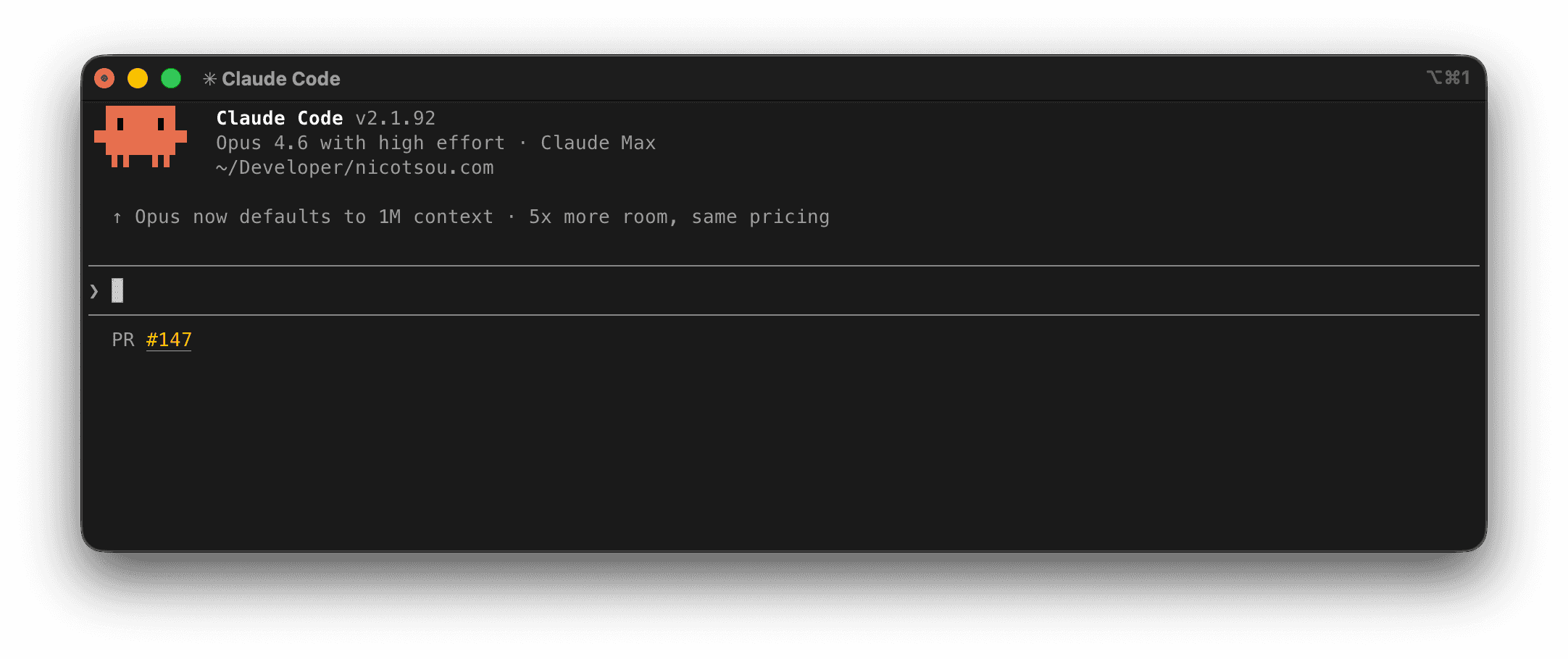 Did I wake up one day and suddenly everyone’s using the CLI and the terminal instead of Jira and Confluence? What year is this?
The pro workflow already exists. Describe what you want in an AI builder. Sync the output to GitHub. Refine with Claude Code or Cursor. Deploy. The person who couldn’t write a for-loop last year now ships internal tools faster than your engineering team ships bug fixes.
The puzzle pieces are here. Ignoring this shift is like trying to make your horse faster during the Industrial Revolution.
And the no-code AI platforms are building production-ready apps, autonomous agents, and data-driven internal systems that previously required full engineering teams. Not landing pages. Not weekend MVPs. The kind of software your CTO used to need a headcount budget for.
Why pay a gatekeeper?
SaaS was revolutionary twenty-five years ago. It moved software to the cloud and killed install CDs. But the model created a new dependency: you rent access to someone else’s logic, stored in their database, designed for everyone, priced per seat whether you use it or not.
You see, the SaaS pitch was always a trade-off. “You don’t have to build it yourself — just pay us monthly and we’ll handle everything.” Fair deal when building software was hard. Less compelling when your AI agent can do it before your morning coffee gets cold.
AlixPartners says the next evolution of enterprise software is already here. Companies transitioning from SaaS to AI-native architectures see 4-to-6x revenue multiple increases. Bain & Company frames it even more directly: “Any routine, rules-based digital task could move from ‘human plus app’ to ‘AI agent plus API.‘”
Let’s make this concrete. You’re paying $150/month for a CRM. An AI agent can analyze your customer data, migrate it to an open-source database you own, set up automations via webhooks, build the integrations you actually need — and you never touch a dashboard. The agent doesn’t need a UI. It needs an API.
The pricing model is shifting too. From seats to outcomes. Sierra’s CEO put it bluntly: “We’re only paid when we drive real results.” When your AI agent replaces three SaaS subscriptions and a part-time admin, the math isn’t subtle.
Why do you need to pay for a gatekeeper when you can have your own database, stored on your own server, built the way you like it?
The warning sign for any SaaS company? Whether it exposes an MCP server. The ones that become agent-accessible infrastructure survive. The ones clinging to human-only UIs are already being routed around.
The counterarguments worth hearing
I know what you’re thinking. “Sure, Nico, but try telling JPMorgan Chase to vibe-code their compliance platform.”
Fair. Let’s steel-man the opposition, because they get a lot right.
Enterprise complexity doesn’t vanish with a prompt. Nobody is going to vibe-code a fleet management system, then vibe-sell it to enterprise clients, then vibe-manufacture the dashboard cameras that feed it data. Enterprise software is not just code — it’s procurement, compliance, change management, vendor accountability, and forty-page security checklists. A five-person startup can replace a CRM with a weekend project. JPMorgan Chase cannot.
Cheaper software doesn’t mean less software — it means more. This is the induced demand argument, and it’s sharp. When you build faster and cheaper, all those shelved ideas suddenly become viable. It’s like building a new highway — it doesn’t reduce congestion, it makes more destinations reachable. GPT-4-equivalent models dropped from $37 to roughly $0.25 per million tokens in twenty-one months. Token prices plummet while AI revenues skyrocket. Demand outpaces the price decline massively. Hopefully.
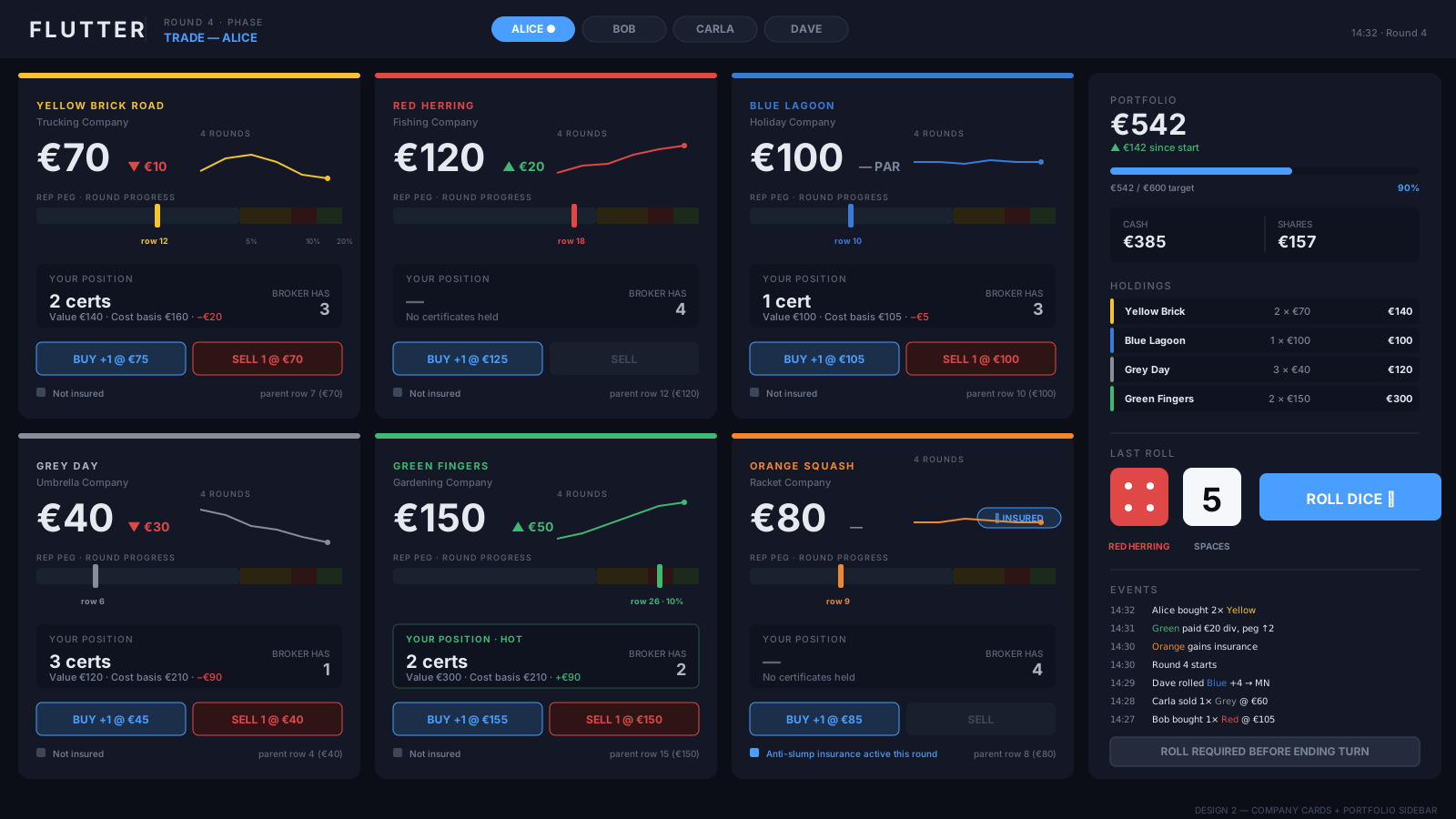 My colleague Wayne vibe-coded a dashboard for a board game port. Tell me this doesn’t look like every other AI-generated UI out there. Bookmark this — check back in six months.
The slop killed my codebase. When AI generates massive volumes of code and nobody truly reads it — how do you ensure quality? Sarah Guo calls it the “slop problem”. Not pet-project code. Production code. Mountains of poorly-reviewed AI-generated code accumulating as technical debt. The priority shifts from “how do we produce code faster?” to “how do we ensure it’s reliable, maintainable, and secure?”
AI-generated UI all looks the same. The Reddit UX community nailed this one: “Most AI-generated UI/UX is starting to look flat, repetitive, soulless”. Emotion, nuance, and true user empathy aren’t things a model can replicate yet. When everyone generates their own app, every app looks like a Vercel template.
And who do you call at 2 AM? Enterprises don’t just buy software — they buy accountability. SaaS companies provide SLAs, dedicated support, security audits, compliance certifications. Your personal AI agent doesn’t come with a 99.9% uptime guarantee.
Most people don’t want to make software. They want software to solve their problems. It’s like saying better kitchen gadgets will kill restaurants.
That’s the best counterargument in this entire debate. And it is right.
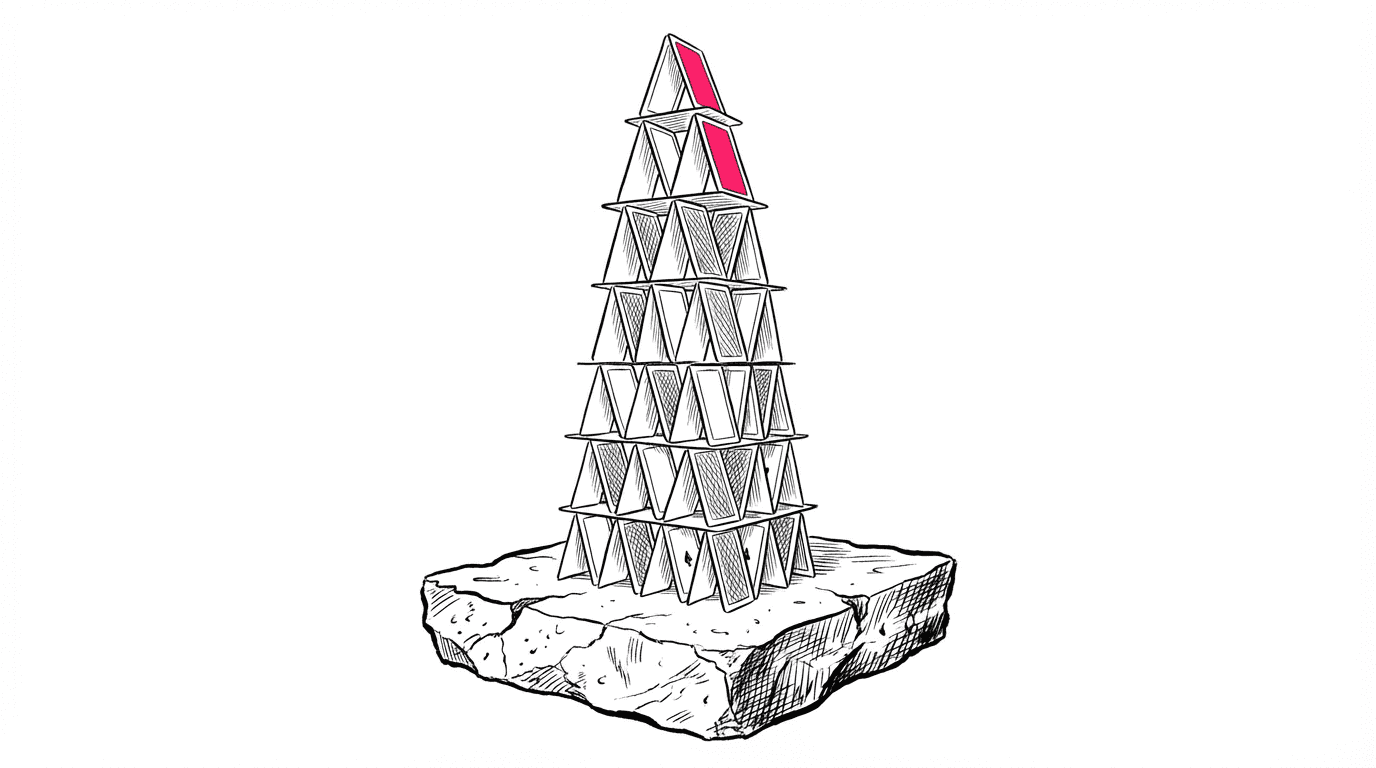
Design isn’t dying — it’s expanding upward
If you’ve read this far and think I’m writing a “designers are doomed” piece — I’m not. The opposite.
If AI commoditizes the code layer, design becomes the only differentiator. But the kind of design that matters changes dramatically. We go from “arrange pixels on a screen” to “orchestrate how systems behave, predict, respond, and self-correct.”
The new design challenge is intelligence design. When do you surface a decision to the user? When do you execute quietly in the background? When does the user need to reclaim control? These are ethical and experiential questions no model can answer alone.
Smashing Magazine is already documenting the new design patterns for AI interfaces — a whole new grammar for an intelligent era. A great article from Vitaly as always. UX Collective calls 2026 the year of “designing for intent” and “Machine Experience design.” UXPin reports that PayPal’s five-person UX team now supports over sixty products — not because they work harder, but because design systems have become governance platforms.
Here’s the polarization that makes this interesting. On one end: invisible UX. Background agents, self-updating states, software you never “use” because it just works. On the other end: high-craft interfaces that become the brand, the moat, and the worldview. Linear. Notion. Figma. Basecamp. Products where the interaction is the experience.
A piano doesn’t stop being a perfect interface just because music software exists.
I should be transparent here. I’ve spent my entire career obsessing over interfaces. Pixel-pushing, component-crafting, “does this hover state feel right at 200ms or 150?” kind of obsessing. I love UI. And precisely because I love it, this moment thrills me.
Because let’s be honest, my friends…
We’ve been living in the Bootstrap-Material Design uncanny valley for more than a decade.
Same card layouts. Same hamburger menus. Same rounded corners with the same shadow tokens from the same design system some intern copy-pasted from Google’s documentation in 2016. The CSS framework era gave us consistency, sure. It also gave us a generation of software that looks like it rolled off the same assembly line. Some minor modernization updates here and there — a gradient swap, a font upgrade, maybe a dark mode toggle — but you get the point.
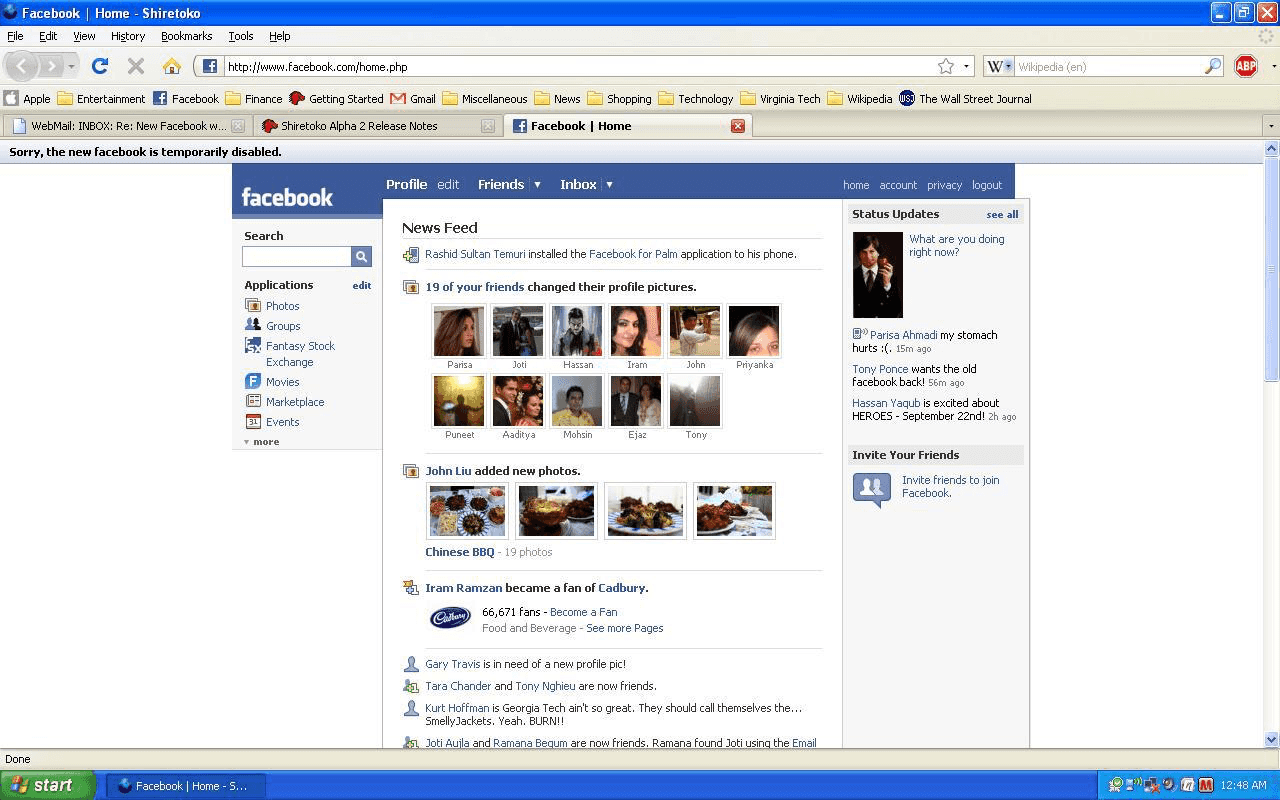 Every Facebook redesign proved the same thing: people don’t love the UI, they love not having to relearn it.
Maybe now it’s the time for metaverse to shine? No? Nobody? Okay, moving on.
Now imagine a world where crafting a rich, distinctive experience doesn’t require a six-figure design team. Where the solo creator ships with the same production quality as a well-funded studio. Where we stop asking “can we afford to make this beautiful?” and start asking “what should beauty even mean here?“.
The framework era standardized design. AI might finally de-standardize it.
That’s the era I’m looking forward to. Not the death of UI — the liberation of it. The moment where interfaces stop converging on the same Figma template and start diverging into something we haven’t imagined yet.
And I’m genuinely curious whether AI will help us break through the web’s own ceiling. The browser was designed for documents, and we’ve been bending it into an application platform for twenty years with duct tape and JavaScript. Sorry — but no sorry! What happens when AI can generate experiences that don’t start with “okay, so we have a div…”? When the constraint isn’t the rendering engine but the idea?
So who’s right? Everyone. And no one.
So after all that — the democratization, the counterarguments, the duct-tape-and-JavaScript confessions — where do I actually land?
Your expense tracker doesn’t need a lovingly crafted interface. Neither does your CI/CD dashboard, your invoice processor, or that admin panel your ops team grudgingly clicks through every Monday. These are completion tools — the user’s goal is to get in, get done, get out. AI will eat these interfaces alive, and nobody will mourn them. Jira doesn’t spark joy. It never did.
But try telling that to the people who build Linear. Or Figma. Or Notion. Products where the interface isn’t a wrapper around logic — it is the logic. Where every interaction carries a point of view. Where the design is the brand, the moat, and the reason you pay. Nobody’s replacing that with a prompt. A piano doesn’t stop being a perfect interface just because GarageBand exists.
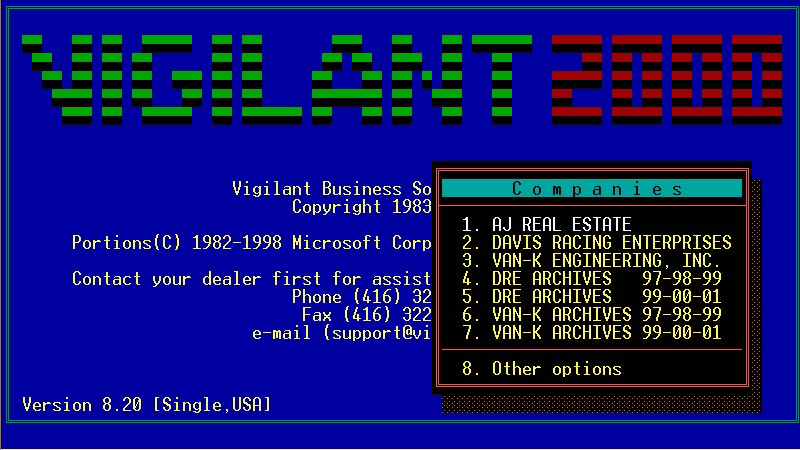 This software has survived three CEOs, two mergers, and one actual fire. The person who wrote this retired in 1997. The software didn’t.
And SaaS? Same split. Stripe isn’t going anywhere — it sits behind legal walls, compliance layers, and infrastructure that no weekend project can replicate. But that project management tool with twelve features you could describe in one sentence to an AI agent? Its clock is ticking.
UI will be erased where optimization rules. UI will become more important where worldview rules.
So the real question was never “is UI dead?” It was always “was your product ever more than its UI?“.
I think about the people panicking right now — the ones refreshing Twitter threads about whether design has a future. And I notice something: they’re almost always the ones whose products were never more than a pretty dashboard over a database. For them, yes, AI is an existential threat. But for anyone who builds with conviction, taste, and a genuine point of view? This is the best era to be a designer. Full stop.
The bottleneck was never the interface. It was imagination.
That’s all folks! 🙌
If this made you rethink your product’s moat — or question whether your favorite SaaS tool has one — that’s the whole point.
Until the next one, keep building things that matter more than their UI.
Cover art credit: ahem… A firefly that eats bananas something something.


